
Lowndes County Court Calendars Explained
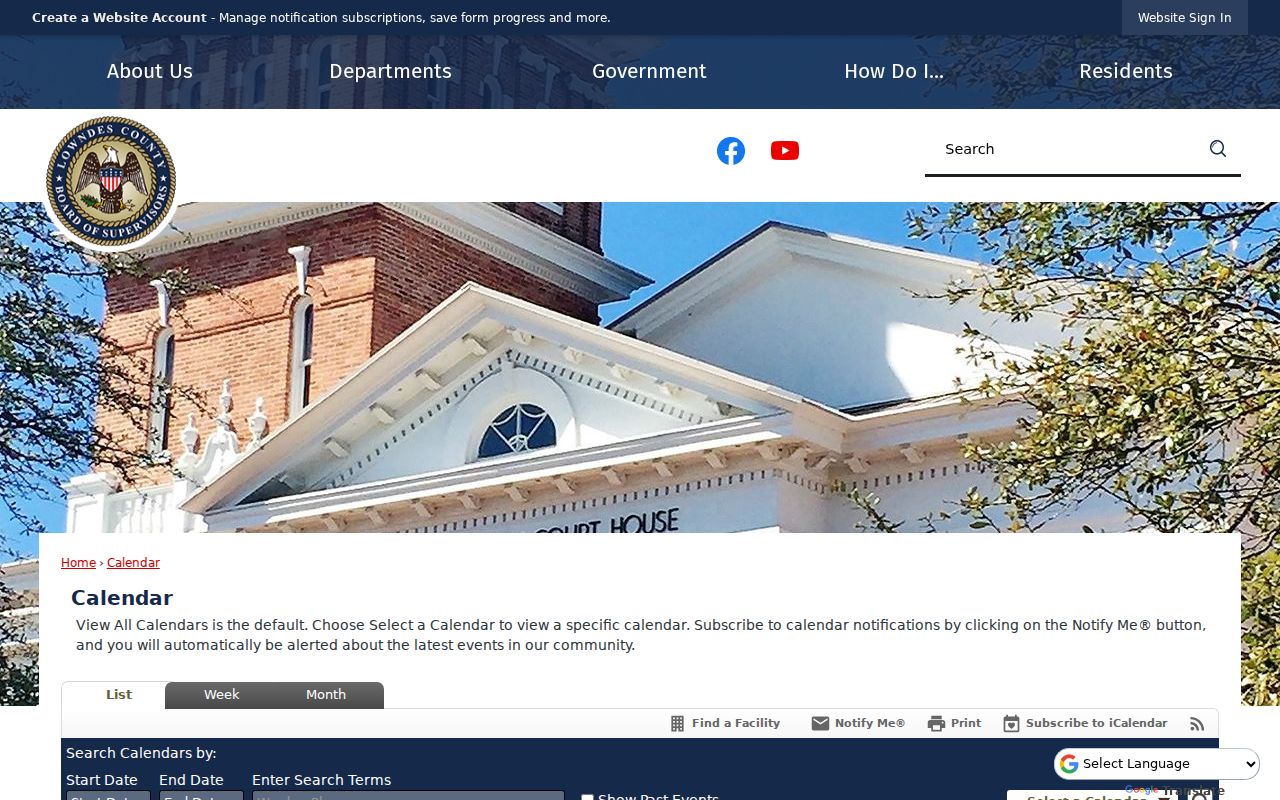
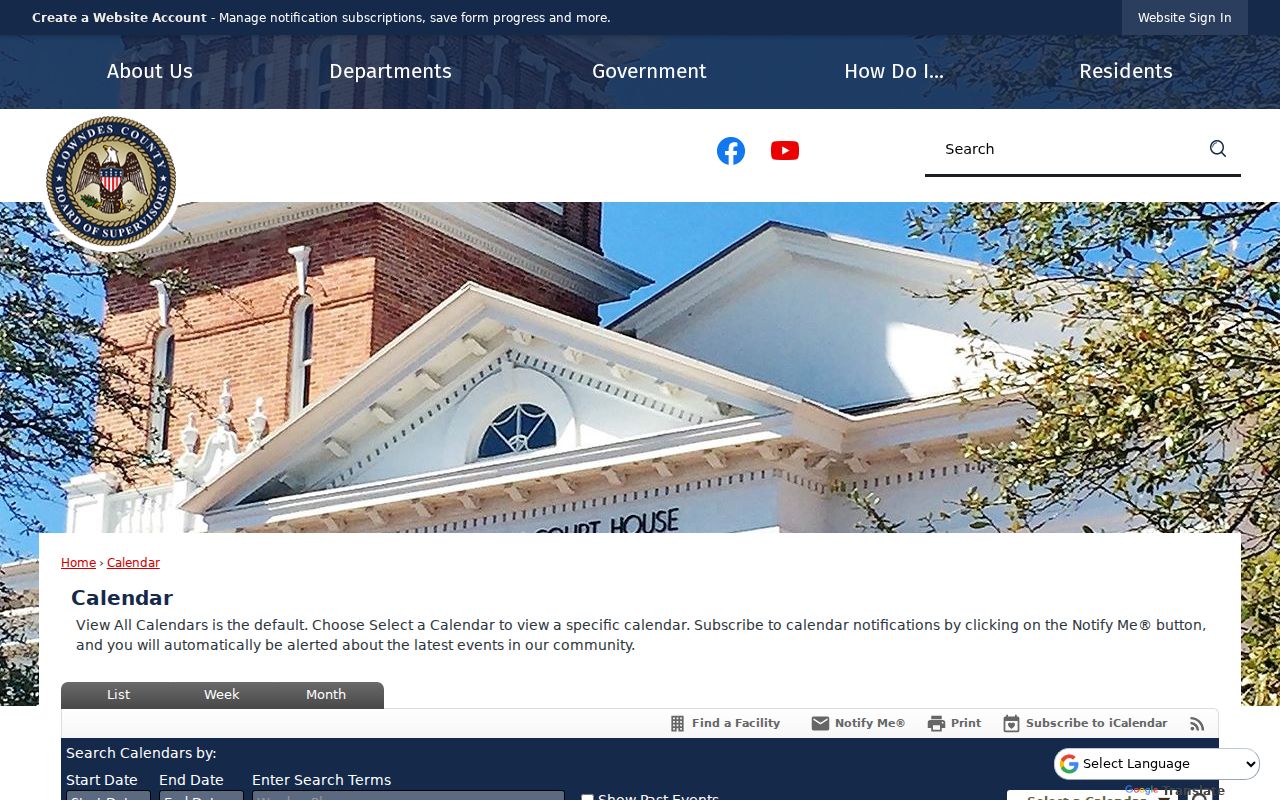
Lowndes County puts out a public county calendar. It is far more than a simple list. You can switch among List, Week, and Month views. You can filter by date range, type in search terms, toggle past events on, pick a specific calendar, print, subscribe through iCalendar, look up a facility, or sign up for Notify Me alerts. The calendar selector offers All Calendars, Main Calendar, and Recreation. Treat it as a tool for county events and term notices. It makes no promise. Not every hearing, continuance, jury selection, or restricted proceeding will show up there.
A sample Circuit Court Term event gives a feel for the format. It lists an event title, a date range, a time, a location, and an address. That is a demonstration of how a public event reads, not a live case setting. The smart workflow is to use the calendar to spot a term or event. Then confirm the actual case through the docket or the court handling it.
Lowndes Court Calendar Views and Notices
The calendar's controls shape how a Lowndes court date search turns out. You pick a view. You set a date range, search a term, choose a calendar, or switch on past events. Past results are history, not current case status. The Subscribe to iCalendar option works nicely for reminders. Yet it is no substitute for the docket or a direct call to the court that set the hearing.
The county's public calendar search page displays these discovery controls themselves rather than any single case result.
Before you rely on a calendar item, write down what you found and where. Note the retrieval date, the calendar URL, the event title, its date and time, and the location. Also record what kind of item it is: a term notice, an agenda, an event, or a docket notice.
Finding Your Court Date
No single channel gives you a specific Lowndes court date every time. Layer them. The county calendar can flag an event or term. Circuit and County case information may sit in the Delta portal or the Sixteenth Circuit MEC. Chancery runs through the Fourteenth Chancery MEC. When a calendar stays vague, a file is old, or access is limited, the clerk is the one who can verify the setting directly.
- Identify the court and gather the case number, citation number, or other public identifier from a notice or docket entry.
- Check the county calendar for a term or public event, then use the appropriate docket path for Circuit, County, or Chancery Court.
- Call the responsible clerk: Circuit Clerk main line 662-329-5900, Circuit/County civil lines 662-329-5908 or 662-329-3394, Circuit/County criminal lines 662-241-1920 or 662-329-3335, Chancery Clerk 662-329-5800, or Justice Court 662-329-5929.
- Confirm the date, time, courtroom or location, setting type, and whether a later order or notice changed the event before appearing.
You can also walk in. The Circuit Clerk office sits at 505 2nd Avenue, Room 260, Columbus. It handles Circuit and County matters in person. If you have an attorney, that attorney can pull the current setting straight from the court notices and case record. Lowndes does not post every individual hearing for the public as a routine matter. Ask the court directly whether a public docket call, a terminal, or a paper calendar exists.
Lowndes Court Date Verification Channels
Each Lowndes court date channel points at different courts. Sixteenth Circuit MEC covers Lowndes Circuit and County Court. Fourteenth Chancery MEC is the Chancery route. Delta offers a county-linked index, though its entries and image coverage run unevenly. The clerk handles certification, paper files, and anything a public interface will not show. A county public-records request fits county-held administrative material. It cannot unlock sealed or restricted court material.
For Circuit and County matters, start with the court-specific docket. If the date stays murky, call or visit the Circuit Clerk. The main office is listed at 505 2nd Avenue, Room 260, Columbus. It is open weekdays 8 a.m. to 5 p.m. Watch the addresses, though. The county facility page uses 505 2nd Avenue North. Historic material plus an older policy capture list other addresses entirely. Confirm the room and destination before you drive over; the discrepancy is not an alternate court location.
A search that returns nothing is a clue, not a dead end. Recheck the court selection and the case number. Check the date fields too. Confirm whether the matter belongs to county, municipal, Justice, Chancery, Circuit, or federal court. Ask the clerk about paper-era files, historic indexes, public terminals, or restricted events. Remember the levels of access. An index result, a calendar event, a document image, and a certified copy are all different.
Columbus Municipal Court runs its own city-level process for traffic and misdemeanor matters. Justice Court offers no public Lowndes case-search portal. For either one, the responsible court or clerk, not a county calendar, is who confirms the date. The calendar may never list the individual matter.
How to Read a Court Setting
A setting line only means something in context. Read it beside the court name and the case number. The listed time may mark a docket call. It may not be the exact minute your matter is heard. A calendar item might describe a whole term or session, not one hearing. Put the date, time, location, purpose, and the most recent docket entry together. Only then plan around it.
| Date | The scheduled calendar date or date range shown by the court source. |
|---|---|
| Time | The listed event time, which can be a docket call or term schedule rather than an individual hearing time. |
| Courtroom / location | The room, courthouse, or other location named in the notice or event. |
| Judge / court | The presiding court or judge field when the source provides it. |
| Setting type | The stated purpose, such as a hearing, trial, term, motion day, or other event. |
A setting on the docket is a plan, not a verdict. It tells you a hearing was set, moved, or closed out, and nothing about what the judge decided. For the result, the court's own entry and any order the docket makes public are the record that counts.
Lowndes Court Calendar Docket Difference
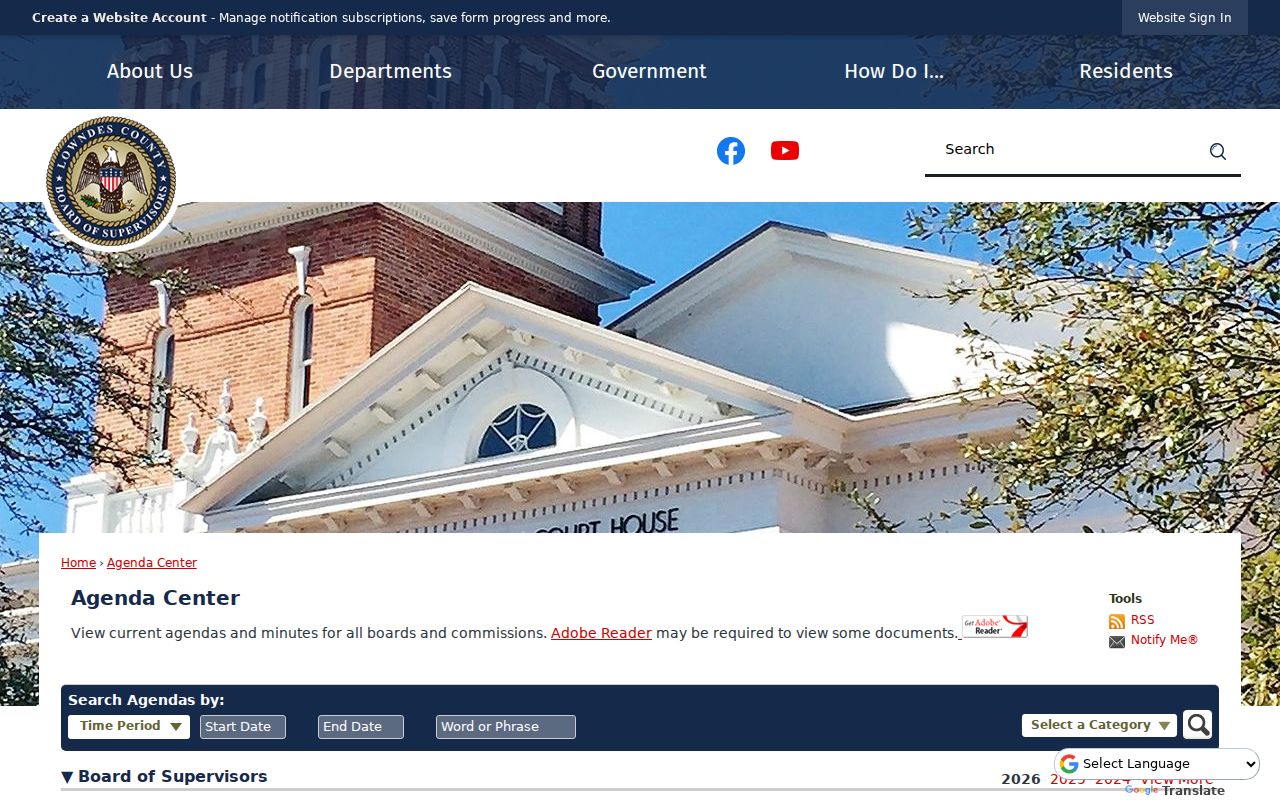
Don't confuse a Lowndes court calendar with the case docket. They serve different jobs. A calendar is a public tool for finding scheduled events. The docket, by contrast, is the running chronology of a case. It holds filings, hearings, orders, and every other entry. The county Agenda Center sits apart from both. It holds Board agendas and minutes rather than any case-by-case hearing list.
The Lowndes County Agenda Center shows that separate archive and its date-search function. It cannot confirm a court appearance, so treat it as county business only.
To run a date check with case number, court selection, and public docket fields, start with the Lowndes County Case Lookup route. Then ask the clerk to verify the setting.
Continuances, Resets, and Cancellations
A Lowndes County court date can move in several ways. An amended calendar can change it. So can a continuance, a reset, a cancellation, or a later docket entry. The record may show the first calendar version was superseded or tentative. So don't treat that version as final.
Write down the source date and event details first. Then check the newest docket or court notice. Posting habits and court technology vary by court and by event type.
The county Circuit Court page links a 2025 Circuit Court Calendar. The document runs 12 pages. It may list terms, non-jury trials, motion days, and judge assignments. Read it visually before relying on any date. The Circuit Clerk should confirm any setting that may have been amended.
Lowndes Circuit Court Term Notices
A Circuit Court term event shows how the county calendar formats a public court notice. The Circuit Court Term event carries a title, date range, daily time, courthouse location, and address fields. Its dates ran August 15 through 19, 2022. That makes it an example of the form. It is not a current or future Lowndes court date.
The official event pattern is preserved without identifying any private case. One term can hold several proceedings. An individual case may be set, reset, or left off the public calendar entirely.
To tie a term notice to a specific public matter, use the case docket and the clerk's confirmation.
If You Miss a Court Setting
Missed a Lowndes County court setting? Act fast. Contact the responsible court right away. Never assume an older calendar item reflects current status. Gather the court, the case number, and the most recent public notice first. Then call the clerk, and your attorney if you have one. The clerk can explain how to check the next setting. It can also explain how to obtain a record available to you.
Missed a setting? A failure-to-appear status, warrant, bond issue, or other consequence can be case-specific, so contact the responsible clerk and attorney promptly rather than relying on a calendar search.
Ask for the current setting, the court’s instructions, and whether a later docket entry or notice controls.
Do not attempt to use a restricted or sealed record to reconstruct a missed hearing detail.
Lowndes Federal Court Calendar Boundary
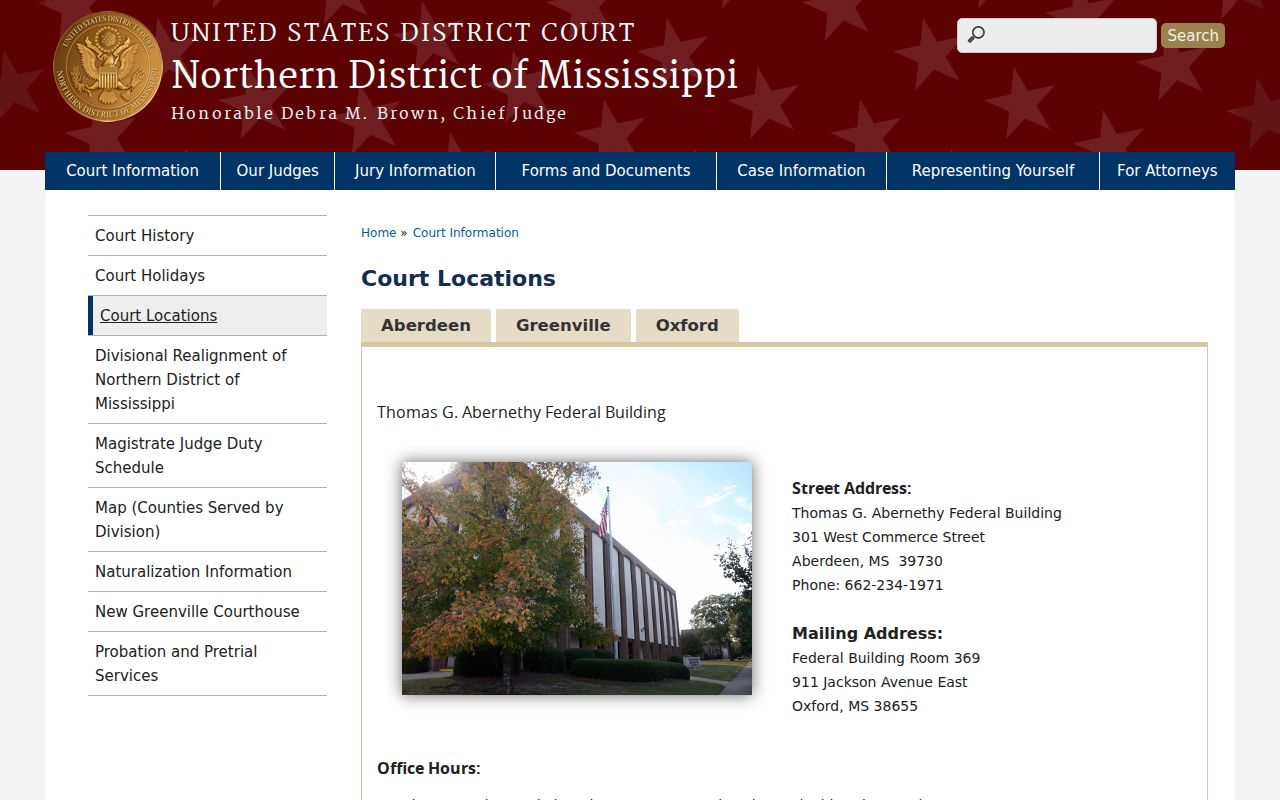
Federal court dates are not Lowndes County state-court dates. A federal matter touching Lowndes lands in the Northern District of Mississippi. It sits in the Aberdeen Division. The federal events calendar lays out location, date and time, courtroom, judge, case number and title, and purpose. Date-range controls let you narrow the list.
The Northern District court-locations page supplies that federal location information.
Federal calendar listings carry a warning of their own. They are not official notice, and users are directed to chambers or court personnel for confirmation. The Northern District events calendar reflects that separate federal system.
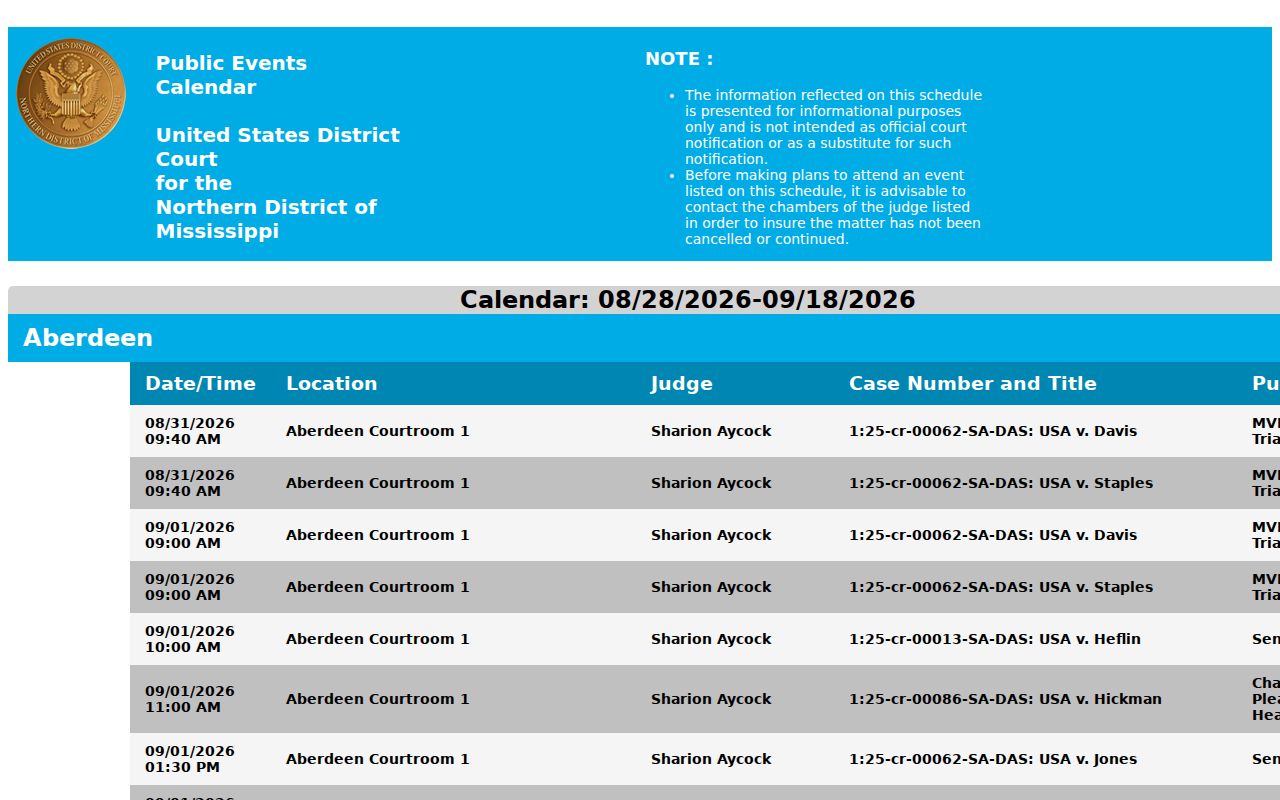
For a federal hearing status, use PACER docket notices plus the federal clerk or chambers. Never rely on a state-court calendar entry.